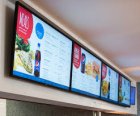
Video Walls


Purpose of a Video Wall System?
For most organizations, a video wall system is a considerable investment. So why spend the extra money when you could just use a single large display, a front projector, or a set of individual monitors?
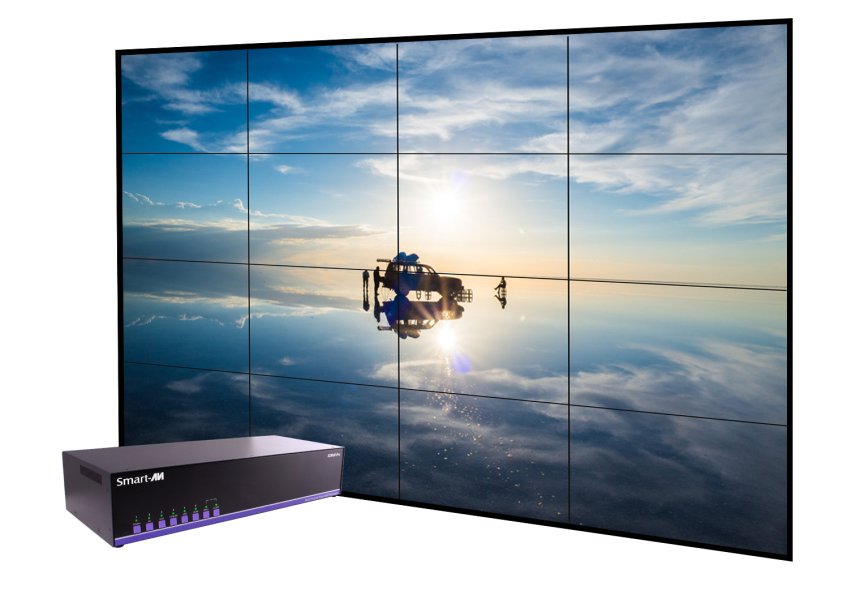
It’s important to understand that a video wall system is an integrated solution: an array of high-resolution displays driven by a powerful processing and computing system called a video wall controller. So while a video wall behaves like a single display, the technology behind it is far more complex and powerful. A complete video wall system can deliver performance, flexibility, and interactivity that simply isn’t possible with more basic solutions.
Higher Resolutions
Since a video wall is built from a tiled array of displays, the total resolution of the display surface increases with each display added to the array. This means a video wall can have a much larger display area and far higher resolutions than a single display or projector. Video walls are also much more scalable than projectors since the display surface can be expanded without sacrificing image quality.
Powerful Processing
In a video wall system, image and video processing is performed by an external video wall controller. As an external component, a controller can leverage far more powerful processing hardware than the processors built into individual displays. These superior processing abilities enable video walls to deliver fluid visual performance and display large amounts of high-resolution content.
Superior Brightness
Most video walls can provide far more brightness and better contrast ratios than a front projector, so they can be used in environments with windows or overhead lighting. That’s because the display technologies used in video walls – like LCD, LED, and rear projection cubes – are less susceptible to being “washed out” by ambient light. These displays also maintain consistent brightness regardless of their size, while front-projected images become dimmer and blurrier when they are enlarged.
Reliable & Resilient
Most video wall systems are built from professional-grade components, and some are specifically designed for 24/7, mission-critical environments. Consumer-grade projectors and displays use cheaper components and can’t provide the reliability or resilience of a video wall. Even high-end projectors require frequent maintenance and are vulnerable to vibration, humidity, and ambient light.
Minimal Maintenance
Because video walls are designed for maximum reliability and up time, most have no consumable parts and require virtually no maintenance over years of operation. In contrast, projectors demand regular downtime to replace expensive lamps and light engines. While a video wall system may initially cost more than a projector, their low maintenance costs make them a more affordable solution in the long term.
Flexible Size & Shape
Video walls offer far more flexibility in terms of size and shape than a single display. Depending on the display type and mounting system used, they can be wall-mounted, free-standing, curved, non-rectangular, and even three-dimensional. They can be small enough to be portable or scaled to massive dimensions. This unique versatility enables video walls to be used in an enormous range of environments and use-cases.
Share
What's Your Reaction?
 Like
0
Like
0
 Dislike
0
Dislike
0
 Love
0
Love
0
 Funny
0
Funny
0
 Angry
0
Angry
0
 Sad
0
Sad
0
 Wow
0
Wow
0